
2026 TSA Rules for Water Bottles: What You Must Know (and How BLENDCUPDAILY Makes Travel Easier)
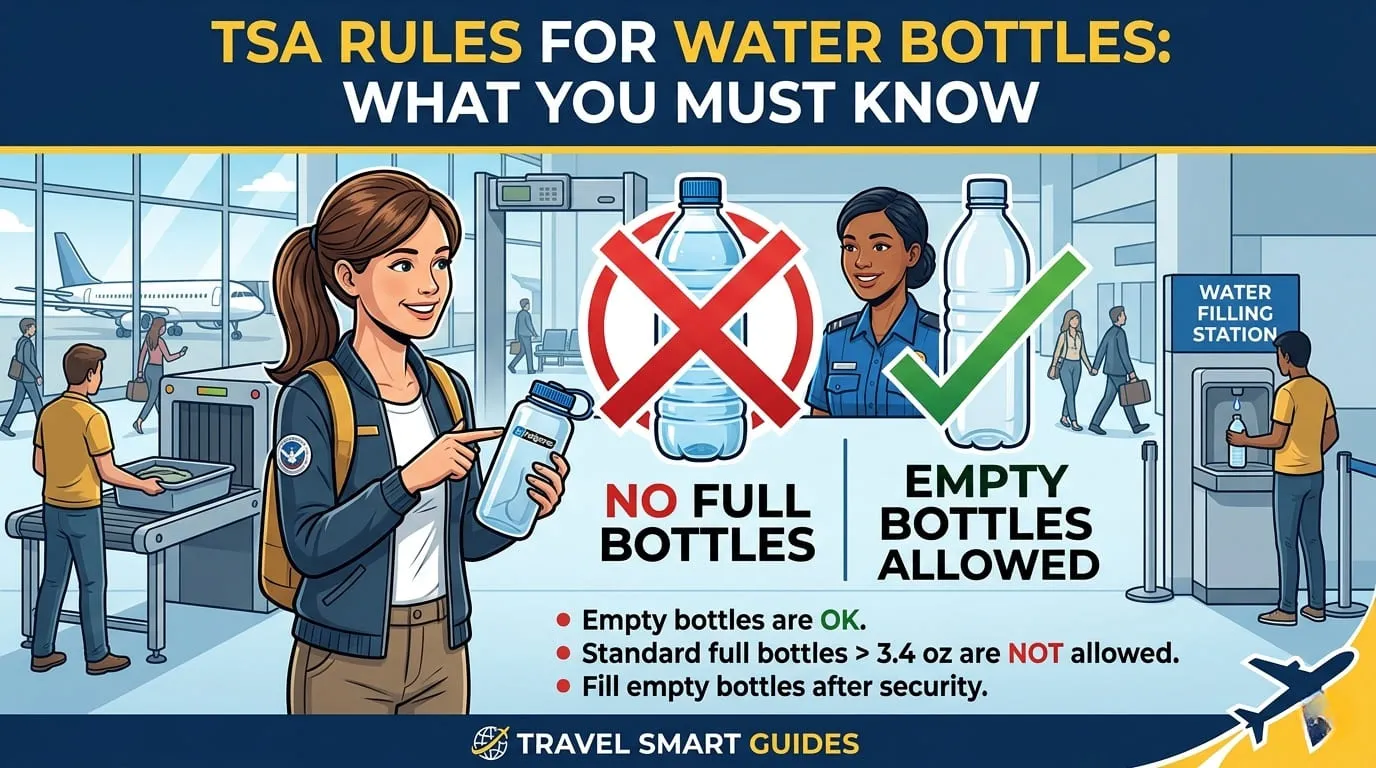
A water bottle can go through airport security only when it is empty. I learned this during a recent airport trip when security checked my bag. A filled water bottle must follow the 3-1-1 liquid rule. Security removes liquids over 3.4 oz (100 ml). This rule controls liquid safety in carry-on bags. Exceptions apply for baby formula, prescription medicine, and some medical liquids. The sections below explain the rules in detail.
Why This Matters for Water Bottle Travel Rules
Common Travel Problems
Air travel creates simple problems with a water bottle at security. I once saw a traveler lose a filled water bottle at the checkpoint. Security removed it because it was not empty. The traveler had no water before boarding, and this caused discomfort.
Many travelers face the same issues with a water bottle during trips:
- Security removes filled bottles at the checkpoint
- Travelers feel thirsty after boarding the plane
- Airports do not always show clear refill stations
- Travelers pay high prices for bottled water after security
I also had a flight where I forgot to empty my water bottle. I had to buy water after security. The price was high, and I wasted time looking for a store.
These problems show why water bottle rules matter. A simple empty bottle strategy helps avoid cost, delay, and discomfort during travel.
TSA Rules Explained for Water Bottle: Core Regulation and Exceptions
3-1-1 Rule Overview
The TSA 3-1-1 rule controls all liquids in carry-on bags. A water bottle with liquid must follow this rule.
Each liquid container must be 3.4 oz (100 ml) or smaller. All containers must fit inside one clear quart-size plastic bag. Each passenger can only bring one bag.
This rule applies to most drinks, gels, and liquid items. It also applies to sports drinks and juice inside a water bottle.
Empty Water Bottle Policy and Real Airport Practice
A water bottle can pass security only when it is empty. TSA allows empty bottles in carry-on bags. Security officers may still inspect the bottle if they suspect liquid inside.
In real airport checks, officers look for:
- Visible liquid inside the bottle
- Sticky or wet residue inside the cap or walls
- Strong smell from inside the bottle
- Signs of recent liquid use or condensation
If a bottle shows these signs, officers may treat it as a liquid container. They may ask the traveler to empty it or discard it.
I once saw a traveler lose a bottle because it had a small amount of water left at the bottom. The officer shook the bottle and saw movement inside.
How to avoid issues:
- Empty the water bottle fully before security
- Wipe the inside with tissue or cloth
- Shake the bottle to confirm no liquid remains
- Keep a quick photo of the empty bottle before entering security if needed for proof
Exceptions: Water Bottle Rules for Baby, Medical, and Duty-Free Items
Some liquids can exceed the 3.4 oz rule.
TSA allows baby formula, breast milk, and baby food in reasonable amounts. Travelers must declare these items at security.
Prescription liquid medicine is also allowed. Security may check it, but it does not need to follow the 3-1-1 limit.
Duty-free liquids can pass if they stay sealed in a tamper-evident bag. Officers may open or inspect them during screening.
These exceptions help travelers carry essential liquids while still keeping security standards.
How Water Bottle Residue Is Checked at Airport Security
Inspection Points Used by Officers
Airport security officers check a water bottle in a very direct way. They focus on simple physical signs to decide if liquid is inside.
They use these main checks:
- Visual check: Officers look for liquid level, color, or shadow inside the water bottle
- Physical check: Officers tilt or squeeze the water bottle to see movement or leftover drops
- Texture check: Officers look for sticky or thick liquid signs inside the bottle walls
- Smell check: Officers smell the water bottle if they suspect juice, alcohol, or other liquids
- Label check: Officers read labels to match the bottle type with possible liquid use
If a water bottle shows any of these signs, officers may treat it as a filled container. They may ask the traveler to empty it again or discard it.
I once saw a traveler stopped because the bottle had a faint smell of juice even though it looked empty. The officer still flagged it for inspection.
Preparation Steps to Avoid Suspicion
Travelers can reduce issues with a water bottle by preparing before arrival at security.
Simple steps:
- Empty and dry the water bottle before leaving home
- Wipe the inside with tissue or paper towel
- Take a quick photo of the empty water bottle as proof of condition
- Use a clear water bottle so officers can see inside easily
- Keep receipts or proof if the water bottle is new or duty-free
These steps help reduce extra checks at security.
Simple Home Checks Before Travel
Travelers can also test a water bottle at home before the flight:
- Paper test: Put a dry tissue inside the bottle. If it stays dry, the bottle is empty
- Shake test: Shake the bottle and listen. Liquid makes a sloshing sound
- Light test: Hold the bottle under light. Any liquid shows reflection or shadow
I use the shake test before every flight. It helps me avoid mistakes at the airport and keeps my travel smooth.
Travel Hydration Plan Comparison for Water Bottle Use
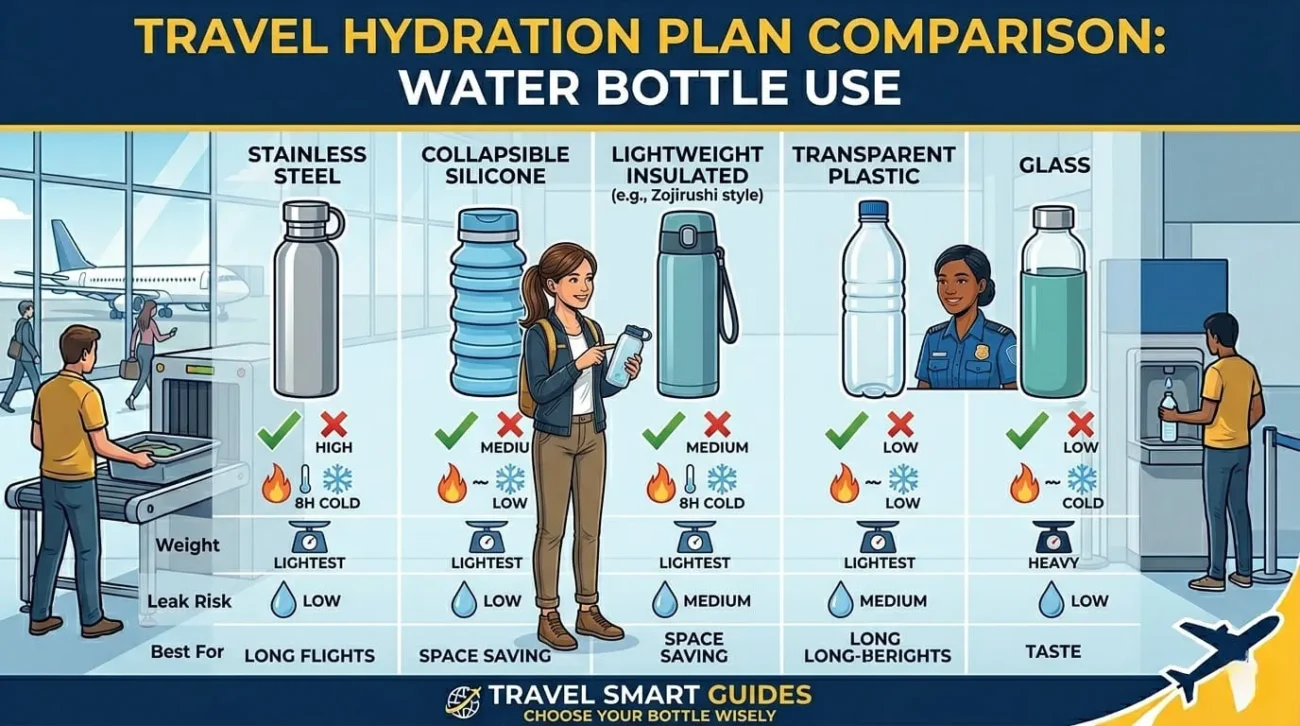
Choosing a water bottle for air travel depends on your needs, travel style, and flight length. A good choice reduces TSA inspection time and improves hydration after boarding. The right bottle also reduces weight and leak risk in your carry-on.
Travel Water Bottle Comparison Table
| Bottle Type | TSA Friendliness | Insulation | Weight | Leak Risk | Best For |
|---|---|---|---|---|---|
| Stainless Steel | Medium | High | Heavy | Low | Long flights |
| Collapsible Silicone | High | Low | Very light | Medium | Space saving travel |
| Lightweight Insulated | High | Medium-High | Medium | Low | Balanced travel use |
| Clear Plastic | Very High | Low | Light | Low | Fast airport security |
| Glass | Low | Low | Heavy | High | Taste-focused users |
Stainless Steel Water Bottle
A stainless steel water bottle offers strong durability and stable temperature control. Many insulated models keep drinks cold for over 8 hours or hot for up to 12 hours. This works well for long flights and layovers.
The downside is weight. A stainless steel bottle adds load to carry-on bags. The inner vacuum structure can also block visibility, which may lead to extra TSA inspection.
Silicone / TPU Collapsible Water Bottle
A collapsible silicone or TPU water bottle saves space. It folds when empty and fits easily into small bags. This makes it useful for light packing and short trips.
However, it does not keep temperature. The fold lines can also trap moisture if not cleaned well. This may increase inspection time if residue is suspected.
Lightweight Insulated Water Bottle
Lightweight insulated water bottle models, such as Zojirushi or Stanley AeroLight, offer a balance between weight and performance. They keep drinks cold or hot for several hours while staying easier to carry than heavy steel bottles.
Some designs support one-hand drinking. This improves comfort during flights and transit.
Transparent Hard Plastic Water Bottle
A clear plastic water bottle is the most TSA-friendly option. Security officers can see inside quickly. This reduces the chance of secondary inspection.
The limitation is weak insulation. Drinks do not stay cold or hot for long. However, it works well for fast airport processing and short flights.
Glass Water Bottle
A glass water bottle provides clean taste and no odor retention. Many travelers choose it for flavor quality.
The weakness is break risk. Glass also adds weight. Travelers should use a protective sleeve and place it clearly in the security tray to avoid inspection delay.
TSA Security Score System (1–5)
| Bottle Type | TSA Score | Secondary Check Risk | Reason |
|---|---|---|---|
| Clear Plastic | 5/5 | Very Low | Fully visible inside |
| Collapsible Silicone | 4/5 | Low–Medium | Flexible, but fold areas matter |
| Lightweight Insulated | 4/5 | Low | Balanced design |
| Stainless Steel | 3/5 | Medium | Not visible inside |
| Glass | 2/5 | High | Fragile + heavy |
Multi-Function Hydration and Nutrition Solution — blendcupdaily Pro Series
If you want both hydration and nutrition, the blendcupdaily portable blender bottle series supports dual use.
- Pro (500ml): basic blending with ice support
- Pro+ (1000ml): larger capacity with stronger blending
- Use case: protein shakes, electrolyte drinks, smoothies after TSA
A water bottle with blending function helps reduce airport food cost and improves energy during travel. After security, travelers can prepare fresh drinks inside the same bottle.
Important travel note:
Devices with motors or batteries may require extra inspection. Travelers should remove or isolate batteries when possible and carry them in hand luggage. Travelers should also tell officers:
“This is a portable blending water bottle. The battery is carried separately.”
Water Bottle Comparison Highlights (For Travel Choice)
- Stainless steel: strong insulation, heavier weight
- Collapsible silicone: space saving, low insulation
- Lightweight insulated: balance of weight and performance
- Clear plastic: fastest TSA clearance
- Glass: clean taste, higher break risk
Practical Travel Tips for Water Bottle Use
Simple preparation improves airport experience:
- Remove cap and fully dry the water bottle
- Take a photo of the empty bottle before travel
- Use transparent bottles when possible
- Place bottle separately in security tray
- Declare electric water bottle devices at screening
A water bottle prepared in this way reduces inspection time and avoids unnecessary delays at airport security.
International Travel / Transit / Airport Notes for Water Bottle Use
Differences in Rules by Country and Region
Different airports apply different rules for a water bottle during security checks. The enforcement level is not the same across regions.
Many airports in the European Union and the United Kingdom follow the strict 100 ml rule. Each liquid container must be 100 ml or less. All containers must fit in one 1-liter clear resealable bag. Some airports also enforce a hard container size limit, not only liquid volume.
Some large hubs in the Middle East and Asia apply stricter manual checks. In airports in the United Arab Emirates, Singapore, and parts of East Asia, officers may open a water bottle, check the lid, or inspect it by hand even if it looks empty.
Even if TSA allows an empty water bottle in the United States, a transfer airport may still apply its own rules. Travelers must check each segment of their trip before departure.
ransit and Cross-Border Liquid Strategy
A transit trip often involves more than one security check. A water bottle that passes the first airport may still face inspection again at the transfer airport.
Duty-free liquids above 100 ml must stay in a sealed tamper-evident bag (STEB). Travelers must keep the receipt attached. If the bag is opened, security at the next checkpoint may remove the liquid.
Simple strategy for transit:
- Complete duty-free purchases at the first departure airport
- Keep all sealed bags unopened during transfer
- Refill your water bottle only after passing each security check
- Avoid carrying large liquids during short layovers
I once saw a passenger lose a sealed drink during transit because the transfer airport required a second inspection.
Customs and Quarantine Restrictions
Some countries apply strict rules on food and liquid entry. A filled water bottle with homemade or undeclared liquid may be removed at customs.
Higher-risk entry regions include:
- Australia
- New Zealand
- Island nations with strict biosecurity rules
These countries focus on preventing biological contamination and food risk.
Safe alternatives:
- Buy sealed bottled water after arrival
- Request sealed water from airlines
- Refill your water bottle after clearing security at the destination airport
Before travel, check official customs and agriculture websites for updated rules. A water bottle plan works best when it follows both security and customs requirements.
Scenario-Based Travel Guide for Water Bottle Use
Air travel rules for a water bottle can feel confusing when real situations happen at the airport. Many problems do not come from the rule itself, but from how it is applied in different travel cases.
Traveling With an Infant
A water bottle or liquid for babies must be declared at security. The traveler should separate formula, breast milk, or baby food for inspection. Ice packs are allowed when used to keep baby items cold. Officers may open containers for screening, but they do not apply the 100 ml limit.
Carrying Prescription Spray or Liquid Medicine
A traveler should carry a doctor note or prescription when bringing liquid medicine in a water bottle or container. The item must be declared at the checkpoint. Security officers may inspect it directly, but medical liquids are allowed above normal liquid limits.
Asked to Open or Empty Your Bottle
Security may ask to open or empty a water bottle if they cannot confirm it is empty. The traveler should follow instructions immediately. If the bottle is taken or discarded, the traveler can ask for a receipt or record the action by taking a photo for reference.
Leakage After Security or During Boarding
A water bottle may leak due to pressure changes or poor sealing. Travelers should pack the bottle upright in a sealed plastic bag inside the carry-on. Soft items like clothes can be placed around it to absorb leaks and protect electronics.
Carrying Ice Packs or Frozen Bottles
A frozen water bottle or ice pack is allowed in some cases, but it may be treated as a liquid once it starts melting. If partially melted, security may apply the 3-1-1 rule. Travelers should fully freeze items or keep them completely solid during screening.
Hydration Benefits for Business or First-Class Travelers
Business and first-class passengers can request sealed water from flight attendants. Cabin crew can provide bottled or cup water at any time during the flight. A water bottle can also be refilled onboard when service allows, improving hydration during long flights.
Conclusion
A smooth travel experience starts with a simple rule: a water bottle must be empty before TSA screening, and filled liquids must follow the 3-1-1 rule. After security, travelers can refill at airport water stations or buy drinks inside the terminal.
The best travel bottle is one that is lightweight, leak-proof, easy to clean, and TSA-friendly. Clear plastic bottles usually pass faster, while stainless steel or insulated bottles work better for long flights but may need extra inspection. Foldable bottles save space, and multi-function bottles like blendcupdaily Pro / Pro+ add value by allowing fresh drink mixing after security.
If you travel often, the right water bottle can save time, reduce stress, and improve hydration during flights. BlendCupDaily designs travel-ready bottles that focus on portability, durability, and post-security convenience.
Explore blendcupdaily to find a water bottle that fits your travel style and makes every trip easier.